

What Is Postpartum Preeclampsia?
Postpartum preeclampsia is the condition whereby a woman develops high blood pressure soon after she has had a baby. It can happen as early as a few days after the birth, or up to several weeks after delivery. Apart from high blood pressure, another feature of postpartum preeclampsia is too much protein in your urine.
Postpartum preeclampsia is very rare, and it is different from preeclampsia because it only happens after you’ve had your baby. Most women with preeclampsia go on to deliver healthy babies and fully recover. But some women experience many life-threatening complications. It’s important to know that the delivery of your baby doesn’t cure preeclampsia.
Most women who develop postpartum preeclampsia do so within 48 hours of childbirth. But the condition can manifest itself as long as six weeks after childbirth. “It takes time for the uterus to shed its lining after birth, so this process may be behind the delay that’s sometimes seen in late-onset preeclampsia after delivery,” says James N. Martin, M.D., past president of the American College of Obstetricians and Gynecologists. It’s also possible this condition begins during pregnancy but doesn’t show signs or symptoms until after the baby has arrived.
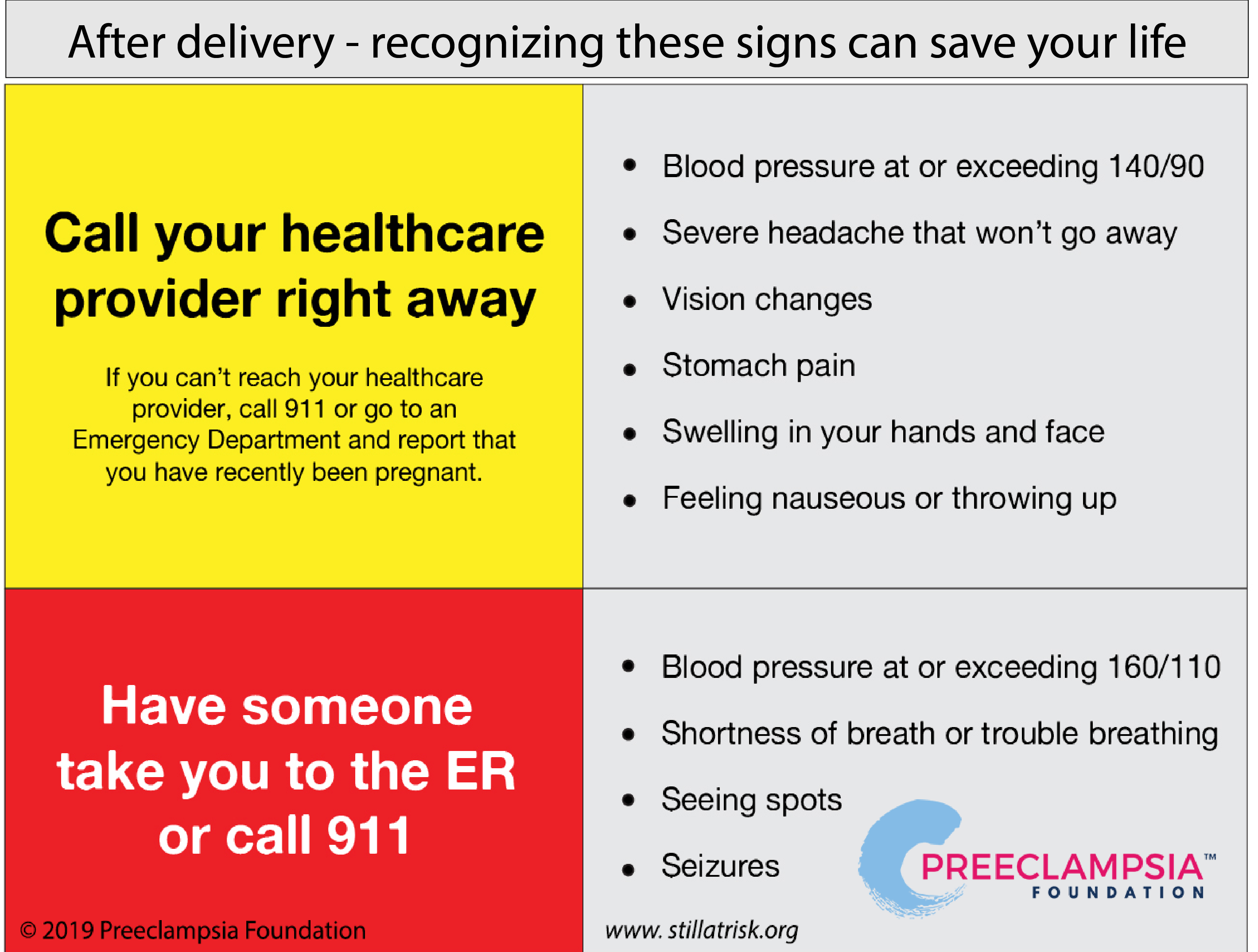
Postpartum preeclampsia can lead to stroke, seizures and other complications if not promptly treated. The causes of postpartum preeclampsia are not known. You can develop preeclampsia after your baby is born; whether you experienced high blood pressure during pregnancy or not. As a mum, you need to continue to monitor your health after delivery. There are warning signs to recognize, which can help save your life. They are:
Seizures
Seeing spots
Shortness of breath or trouble breathing
Blood pressure at 160/110 or above
Symptoms of preeclampsia after birth
The main symptom of this condition is high blood pressure (140/90 millimeters of mercury — mm Hg). Normal blood pressure is usually 120/80 mm Hg. Other common symptoms include:
New or unusual headaches (can be severe)
Eye problems (blurry or loss of vision, sensitivity to light)
A swollen face and limbs (arms and legs)
Stomach pain near your ribs
Nausea and vomiting
Decreased urination
Sudden weight gain (several pounds or more in a week)
There are also serious complications that include:
Stroke
Seizures
Organ damage (kidneys, liver, brain)
Coma
Fluid in your lungs
Blood clots
Red blood cell damage
This is a very serious condition that can progress quickly. If you have some of these symptoms, call your doctor right away. If you can’t reach your doctor, go to the nearest emergency unit.
What are the risk factors for postpartum preeclampsia?
Certain risk factors can increase your chances of getting postpartum preeclampsia. These include:
Obesity
High blood pressure (hypertension) during pregnancy
Family history of postpartum preeclampsia
Being a young mother under age 20
Being an older mother above age 40
Having twins or multiple babies
Diagnosis
If your healthcare provider suspects you might have postpartum preeclampsia, he or she might perform the following tests:
Blood pressure check
Blood tests to do a platelet count and check the function of your liver and kidneys
Urinalysis to check your urine for protein
Brain scan to look for possible brain damage if you have had a seizure
Your doctor will check your blood pressure before you leave the hospital after giving birth. He will check it again at your post-birth doctor visits. If your doctor suspects you have the condition, a blood test and urine test can provide more information. A blood test involves inserting a small needle connected to a syringe into the vein in your arm to collect a sample of blood. A urine test involves peeing into a cup at a lab or doctor’s office. If your blood pressure is too high, your doctor may send you to the hospital for overnight observation.
Treating Preeclampsia After Birth
Your doctor will prescribe medication to treat postpartum preeclampsia. Depending on your specific case, these medications may include:
medication to lower blood pressure
anti-seizure medication, such as magnesium sulfate
blood thinners (anticoagulants) to help prevent blood clots
It’s generally considered safe to take these medications when you’re breastfeeding, but it’s important to discuss this with your doctor.
Source: pulse.ng