
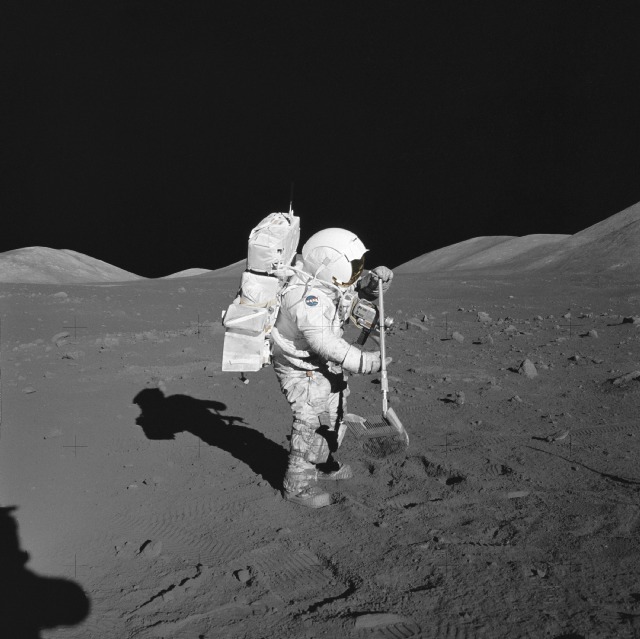
Nigeria has announced plans to send an astronaut into space by 2030, as part of its drive to develop a world-class space industry.
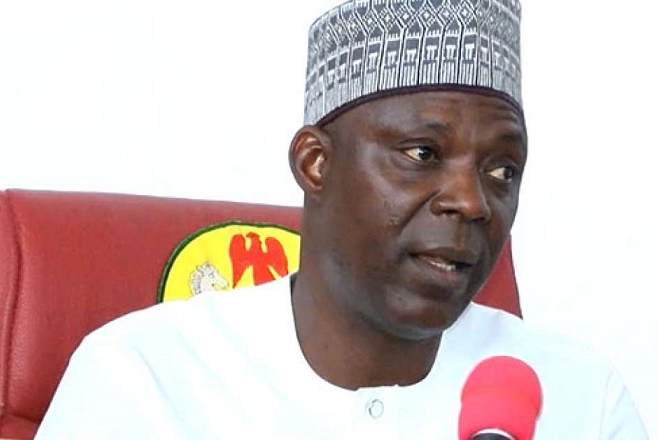
“The space program is very important,” said Dr. Ogbonnaya Onu, Minister of Science and Technology, during a speech in the capital city Abuja.
“Space is a major asset that Nigeria must be involved in for the purpose of protecting national interests.” A Nigerian Space Agency delegation will visit partners in China this month to discuss logistics and investment for a manned space mission, which would be the first by an African nation.
The case for space Dr. Onu’s announcement has been greeted with skepticism, partly as it came soon after a scam email demanding $3 million for a lost Nigerian astronaut went viral, and as policy announcements from the new government have been scoring poorly on the Buharimeter, a Nigerian civil society website assessing policy commitments.
Onu also recently announced plans to start a pencil manufacturing industry that would create 400,000 jobs. But Nigeria’s space program is no joke, and it is making steady progress.
The National Space Research and Development Agency (NASRDA) has launched five satellites since 2003, with three still in orbit delivering vital services.
The most recent – NigeriaSat-X — was the first to be designed and constructed by NASRDA engineers, and more advanced models are in development.
The space agency has made extensive and creative use of the satellites, from analyzing climate data to improve farming practices, to retrieving hostages from Boko Haram, and officials argue this proves space exploration is essential for Nigeria.
“We contribute to various sectors that benefit the nation,” says Felix Ale, NASRDA communications chief. “Space applications are key to development.”
Capacity has improved through greater investment in infrastructure and skills, says Ale, adding that NASRDA has now trained over 300 staff to PhD or BsC level.
Crucially, the industry also benefits from political will at the highest level. “The president is committed to the program,” says Ale. “To ensure that dreams transfer to reality.”
Grand ambition Launching an astronaut into orbit represents a greater challenge than Nigeria’s previous missions, but leading figures from the space industry are optimistic.
“To train an astronaut from selection to flight takes about eight years,” says Dr. Spenser Onuh, head of the Centre for Satellite Technology Development. “2030 is realistic in my opinion…Responses from the international collaborators are very supportive and encouraging.”
Professor Calestous Juma, a specialist on space programs in developing countries at the Harvard Kennedy School, suggests the mission represents “lofty ambition” that “may or may not happen as planned.” But he believes that the vision is more important than the outcome.
“Scientific, technological and engineering capabilities would have direct economic benefits to Nigeria long before the decision of putting a person in space is made,” says Juma.
“Space walks are probably the least important. It is the scientific and technological infrastructure and its linkages to the rest of the economy that matters.”
Inspiring a continent The Nigerian space program has ambitions beyond its borders, and it is hoped that bold statements — such as a manned mission — will inspire stargazers across the continent.
“This would be a landmark achievement for Nigeria and Africa, which will encourage the rest of Africa to get involved,” says Ale. Nigeria already shares resources from its space assets, such as providing satellite imagery to Mali, and has supported the idea of an African Space Agency.
With an ever-increasing number of African states investing in space programs, while traditional powerhouses downsize, the continent could be the hotspot of exploration for years to come.
“We wanted a concept that was really cheap,” said Ledgard, “and the drones themselves will contain a tiny amount of super high-tech and a lot of low-tech.”
Built to be robust, economical and simple to repair, they will be powered by electric engines and have a fixed wing design, more closely resembling commercial planes rather than quadrocopters.
The idea could have a great impact on the local economies of developing African countries, This is a multi-billion dollar industry, without question; said Ledgard.