
By Olugbenga Olaoye, Ph.D.
In Spencer Johnson’s timeless book Who Moved My Cheese?,four characters; two mice, Sniff and Scurry, and two little people, Hem and Haw are faced with an uncomfortable reality: the cheese they rely on for sustenance has disappeared. Sniff and Scurry quickly adapt, running into the maze to search for new cheese. Hem resists, clinging to old habits and denying change. Haw hesitates, fearful of the unknown, but eventually learns to embrace the new maze. The lesson is simple yet profound: change is inevitable, and survival depends on adaptation.
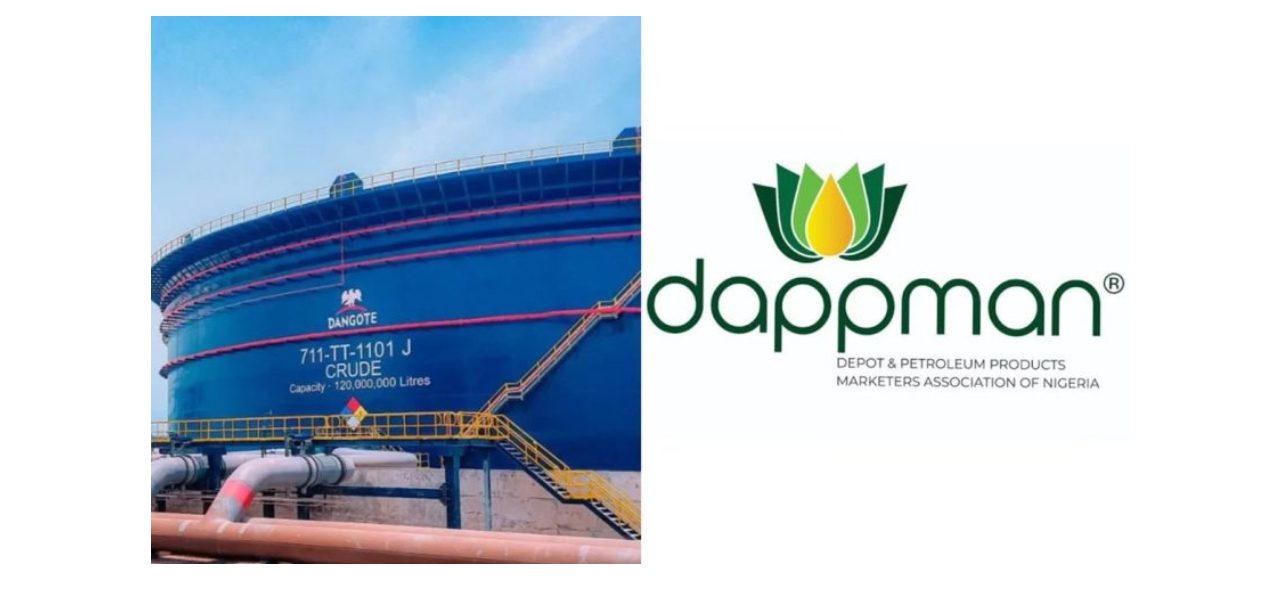
Nigeria’s downstream petroleum sector now finds itself in a similar maze. At the center of this unfolding drama is the Dangote Petroleum Refinery, Africa’s largest industrial project, and the Depot and Petroleum Products Marketers Association of Nigeria (DAPPMAN), the powerful cartel of fuel importers and depot operators. The Dangote refinery, with its sheer scale and market ambitions, has moved the cheese. DAPPMA, once the custodian of Nigeria’s fuel imports, is resisting this shift. And in the middle lies the Nigerian public, anxious for affordable, reliable fuel, yet often crushed under the weight of industry infighting and policy indecision.
The real question is not whether Dangote will dominate fuel supply, it already has, and will for years to come. The question is whether Nigeria’s fuel economy can evolve in a way that serves the people, or whether it will remain stuck in old habits, waiting for a past that will never return.
The Historical Trap: Why Nigeria Imports What It Produces
For decades, Nigeria has lived with a paradox. The country pumps over 1.3 million barrels of crude oil per day, ranking among Africa’s top producers, yet it has been chronically dependent on imported refined products. Four state-owned refineries, with a combined nameplate capacity of 445,000 barrels per day, have sat largely comatose for years due to mismanagement, underinvestment, and corruption.
In this vacuum, fuel importation became both a necessity and a goldmine. Associations like DAPPMAN flourished, bringing in petrol, diesel, and kerosene to feed Nigeria’s growing demand. But this import-driven system was built on fragile foundations. The government’s subsidy program, designed to shield citizens from high global oil prices, became a multi-billion-dollar rent-seeking enterprise. Importers profited handsomely from the arbitrage between subsidized local prices and volatile international markets.
For ordinary Nigerians, this arrangement translated into recurring fuel scarcity, endless queues, and prices that swung with global crude benchmarks and foreign exchange shortages. For the political class, it became a delicate balancing act: removing subsidies triggered public backlash, while sustaining them drained public coffers. Importers, DAPPMAN chief among them, became deeply embedded in this political economy, their fortunes tied not to efficiency or innovation but to government policy and global price swings.
It is against this backdrop that the Dangote refinery emerged, promising to rewrite Nigeria’s refining story.
The Dangote Disruption
The Dangote Petroleum Refinery is no ordinary project. With a nameplate capacity of 650,000 barrels per day, it is the largest single-train refinery in the world, built at a staggering cost of $19 billion. Its ambition is equally audacious: to meet Nigeria’s domestic demand for refined products and position itself as a major exporter to West Africa and beyond.
Since commencing operations, Dangote has adopted aggressive strategies to secure market dominance. It set competitive ex-depot prices and, from August 2025, announced nationwide free freight to marketers, a move that undercut regional price disparities and weakened the logistics advantage of depot operators. By sheer scale and integration, Dangote has positioned itself as the inevitable fulcrum of Nigeria’s fuel economy. The recent logjam between Dangote and the Petroleum Tanker Drivers (PTD) on the issue of unionizing refinery tanker drivers also confirms this position (watch out for my next write-up on the PTD)
For DAPPMAN, this is nothing short of existential disruption. An industry that thrived on import arbitrage now faces redundancy. Depot owners accustomed to high margins on imported fuel now watch as Dangote fills storage tanks across the country with cheaper, locally refined products. To them, Dangote is not just a competitor; it is a juggernaut with the power to dictate supply, pricing, and access.
But while Dangote’s efficiency is undeniable, its dominance raises new fears, the risk of monopoly, the possibility of predatory pricing, and the concern that one company could hold Nigeria’s fuel economy hostage.
DAPPMAN’s Resistance
DAPPMAN has not taken this quietly. Its members argue that Dangote’s pricing strategies are unfair, that access to refined products must be transparent, and that the refinery’s growing control could squeeze them out entirely. Some warn that without their participation, Nigeria risks replacing one broken system (import dependency) with another (a domestic monopoly).
Yet, beneath these arguments lies a refusal to adapt. DAPPMAN’s business model was built on an era of cheap arbitrage, opaque subsidy payments, and foreign exchange gains. With the cheese now moved, the association looks less like a dynamic innovator and more like Hem in Who Moved My Cheese? clinging to the old system, demanding that the cheese be returned, unwilling to explore the new maze.
To be fair, their concerns are not entirely unfounded. A market dominated by one refinery is not without risks. But the unwillingness to pivot, to invest in retail transformation, to build consumer-facing value chains, or to embrace technology, exposes DAPPMAN’s deeper problem: an addiction to the past.
Government in the Middle
The federal government sits awkwardly between these two elephants. On the one hand, it celebrates Dangote as the long-awaited solution to Nigeria’s refining deficit and an opportunity to save billions in foreign exchange. On the other hand, it is wary of public anger if fuel prices spike, and cautious about ceding too much market power to a single player.
NNPC Limited, itself a shareholder in the Dangote refinery(initially 20% but later scaled down to 7.2% due to inability to meet payment obligations), complicates matters further. It is both regulator and competitor, referee and player, blurring the lines of governance. Policy vacillation, whether on subsidy removal, import liberalization, or pricing regulation, adds to the confusion.
The government faces a clear challenge: how to balance Dangote’s dominance with fair competition, ensuring that Nigerians benefit from stable supply and reasonable prices while avoiding the pitfalls of a new monopoly.
The Public Interest
Lost in the Dangote-DAPPMAN tug-of-war is the Nigerian consumer. For ordinary citizens, the battle over ex-depot prices, freight margins, and import licenses means little. What matters is whether fuel is affordable, available, and reliable.
Too often, Nigerians have been forced to bear the cost of industry inefficiency, through endless queues at filling stations, sudden price hikes, and scarcity that paralyzes daily life. They are, in many ways, like Haw in Who Moved My Cheese? awarethat the cheese has moved, but hesitant to trust new paths without reassurance.
What Nigerians need is not another monopoly or cartel, but a competitive, consumer-focused downstream sector. One where retail stations evolve into true service hubs, offering not just petrol but also quality convenience retail, reliable technology, and better customer experience.
Lessons from Who Moved My Cheese?
The Dangote-DAPPMAN crisis can be mapped neatly onto Johnson’s parable:
Dangote and the players that have joined forces with him resembles Sniff and Scurry; anticipating change, investing heavily, and moving quickly into the new maze.
DAPPMAN mirrors Hem; resisting change, longing for the old system of imports and subsidies.
The moral is clear: those who adapt thrive; those who resist perish. Nigeria’s downstream sector cannot afford to cling to the past.
Moving Forward
If this crisis is to benefit Nigeria rather than harm it, three shifts are critical:
1. Dangote must collaborate: Market dominance must be balanced with responsibility. Transparency in pricing, fair access for marketers, and collaboration with government and independents are essential to avoid the perception of monopoly.
2. DAPPMAN must reinvent itself: The days of rent-seeking imports are gone. The association’s members should invest in downstream retail transformation, digitization, and diversification. They must learn, like Haw, that new cheese exists, but only for those willing to seek it.
3. Government must govern and regulate with transparency: Clear, transparent regulations are needed to ensure competition, prevent abuse, and guarantee consumer protection. Government should not be a bystander; it must actively shape a market where efficiency, not monopoly, drives outcomes.
Conclusion
Nigeria’s fuel economy is at an inflection point. The cheese has moved. The old import-driven model is dying, and a refinery-driven future is here (BUA is coming). But whether this transition delivers for Nigerians depends on the choices made today.
If Dangote embraces partnership rather than domination, if DAPPMAN reinvents instead of resists, and if government governs with clarity, the country can finally break free from the cycle of scarcity and subsidy. But if the tug-of-war persists, Nigerians will once again be left waiting in line, paying the price for an industry that refuses to adapt.
The maze has changed. The cheese is gone. The question is: when will DAPPMAN, NUPENG and PTD be bold enough to accept this reality?
Olugbenga Olaoye is a seasoned professional with extensive experience in the oil and gas industry. He has a PhD in Economics from Covenant University, specializing in energy economics and holds a master’s degree in public service from the Clinton School of Public Service, USA and an Executive MBA from the Lagos Business School. He writes from Fort Worth, Texas. USA. Email: gbengausedu@gmail.com