
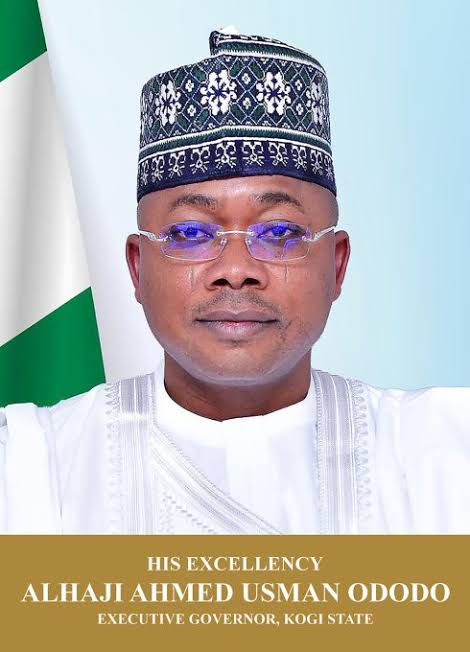
Kogi State has taken a significant stride toward institutional and fiscal stability, with the administration of Governor Ahmed Usman Ododo securing the establishment of a state Anti-Corruption Agency and the acquisition of 15 mining licenses from the federal government within its first two years in office.
This development marks one of the clearest signals yet of the state’s renewed push for transparency and revenue diversification. Alongside the Anti-Corruption Agency, the state government also worked with the House of Assembly to establish a Kogi State Electricity Distribution Company, while maintaining a standard January to December budget cycle with over 70 percent budget performance and growth in capital expenditure.
Usman Ododo was sworn in on January 27, 2024, succeeding Yahaya Bello, with Salifu Joel as his deputy. Before his election, he served as auditor-general for local governments in Kogi State, a role in which he oversaw financial audits of local government councils across the state.
Since assuming office, the administration has set out to build a state government anchored on accountability, prompt welfare payments and a steady widening of the state’s revenue base, with the new mining licenses positioned as a deliberate effort to boost internally generated revenue and create employment for the state’s youth.
Ododo’s background as an accountant, with a first degree in accounting from Ahmadu Bello University and a PhD from the University of Lagos, has shaped much of this fiscal direction. His tenure as auditor-general gave him a close-up view of the gaps in the state’s financial systems, insight that now appears to inform the reforms his administration has rolled out.
Under his leadership, the state has cleared a backlog of unpaid salaries, gratuities and leave allowances owed to civil servants, while approving cash backing for pending staff promotions. In education, teachers have continued to receive prompt salary payments, and schools across the three senatorial districts have been renovated to improve learning conditions.
To support residents through the effects of subsidy removal and other economic pressures, the government has sustained a quarterly food distribution programme reaching all local government areas in the state.
The reforms have also drawn support beyond Kogi. Ododo is regarded among the Progressive Governors of the All Progressives Congress, and his role in the party’s recent electoral victories in Edo and Ondo states has reinforced his standing within the APC’s broader political structure.
As Kogi looks ahead, the new Anti-Corruption Agency and the state’s growing mining portfolio are expected to lay the groundwork for stronger institutions and a more diversified economy in the confluence state.
Ododo has indicated that his administration remains committed to building on these gains, with continued focus on civil service welfare, education and revenue growth as the state works toward long-term economic stability.
Samuel Agboola is a member of the editorial team of TheScript Newspapers