
Nigeria’s economic future hinges on its ability to look beyond crude oil. Export diversification is no longer a talking point, but a fiscal necessity. The foreign exchange crisis, mounting pressure on the naira, and the volatility of global oil markets have made it abundantly clear that Nigeria must build an export economy capable of standing on its own. This is precisely the challenge the Nigerian Export-Import Bank (NEXIM) was created to address, and in recent years, its interventions have grown sharper, bolder, and more consequential.
NEXIM Bank is Nigeria’s official Export Credit Agency (ECA), established by Act 38 of 1991 with a share capital held equally by the Federal Government of Nigeria and the Central Bank of Nigeria. Since its inception, the bank’s primary role has been to facilitate and promote Nigeria’s non-oil exports through the provision of financial and risk-bearing services, trade and market information, and advisory support. It targets the diversification of Nigeria’s export basket, focusing on agriculture, manufacturing, and solid minerals as the sectors with the greatest potential to generate sustainable foreign exchange earnings.
The bank’s suite of offerings is designed to support exporters at every stage of their journey. NEXIM provides a broad range of credit facilities including the Export Development Fund, Trade Finance Facility, Small and Medium Enterprise Export Facility, Women and Youth Export Development Fund, and specialised loans for the Nigerian creative arts and entertainment industry. Beyond credit, the bank provides guarantees, credit insurance against political and commercial risks, and a rediscounting and refinancing facility that enables deposit money banks to offer pre- and post-shipment finance to exporters. These offerings ensure that Nigerian businesses have the financial backbone to compete in regional and global markets.
The cumulative impact of these services is reflected in the numbers. NEXIM has disbursed over N420 billion in concessionary financing to Nigerian exporters, creating more than 12,000 direct jobs and thousands more across the value chain. In 2025 alone, the bank channelled N108 billion to exporters under its various facilities, as Nigeria’s non-oil exports climbed to N3.17 trillion in the first quarter of that year and $3.225 billion in the first half. These are not incidental gains; they are the outcome of deliberate, sustained financing interventions that are gradually reshaping the composition of Nigeria’s external earnings.
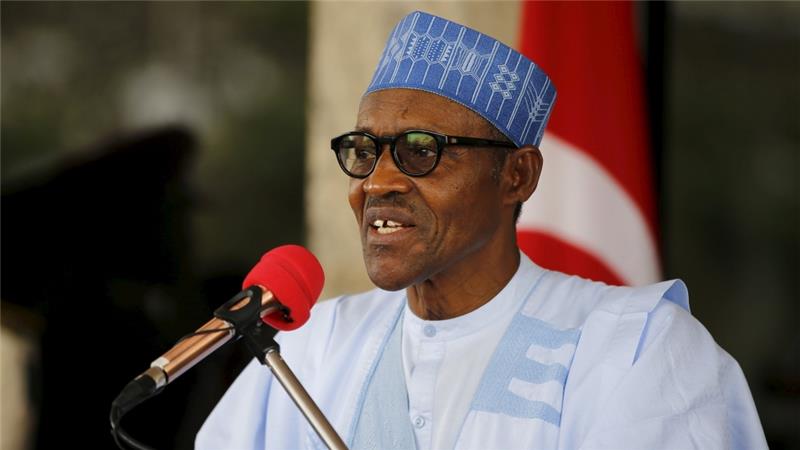
Much of this progress has been driven by the strategic orientation of the bank’s Managing Director and Chief Executive Officer, Mr. Abubakar Abba Bello. Since his appointment in April 2017, Mr. Bello has not only stabilised the institution but has fundamentally elevated its role as a trade finance actor of regional consequence. An alumnus of Harvard Business School’s Advanced Management Programme with over 30 years of banking experience, including tenures as Executive Director at Unity Bank Plc and as pioneer Managing Director of United Bank for Africa subsidiaries in Chad and Zambia. Mr. Bello brings a depth of international banking expertise that is evident in how NEXIM now operates and engages globally.
At the start of his tenure, Mr. Bello introduced the PAVE framework; Produce, Add Value and Export as the bank’s strategic compass. This vision is built on a clear conviction: that Nigeria’s export future lies not in shipping raw commodities, but in adding value domestically before goods reach international markets. Under this framework, the bank has financed industrial processing plants in the shea sector to bring Nigerian products up to global quality standards, supported agro-processing facilities, and channelled financing into the solid minerals sector to stimulate value-added mineral exports.
The most ambitious infrastructure expression of this philosophy is the Regional Sealink Project, a flagship Public-Private Partnership championed by Mr. Bello to close the maritime logistics gap across West and Central Africa. By establishing dedicated ocean-going vessels connecting seaports within the region, the Sealink project directly reduces the prohibitive cost of moving goods, facilitates bulk commodity trade, and deepens regional integration. When fully operational, the initiative is projected to generate between $500 million and $1.2 billion in annual bulk export revenues— a figure that underscores how seriously NEXIM is thinking about the infrastructure behind trade, not just the financing in front of it.
Expectedly, Mr. Bello has also invested in inclusion as a pillar of the bank’s growth strategy. The Women and Youth Export Development Fund (WAYEF) reflects an understanding that trade diversification cannot succeed if it bypasses the majority of the population. Through partnerships with the Small and Medium Enterprises Development Agency of Nigeria, the bank has extended its reach to micro and small businesses, building their capacity to leverage the African Continental Free Trade Area and access global markets. Businesses like Cibi Nigeria, a granite and marble polishing company, and manufacturers in the cement and furniture sectors have experienced measurable growth through NEXIM’s export financing and capacity-building support.
On the global stage, Mr. Bello has been deliberate about forging alliances that extend NEXIM’s influence far beyond Nigeria’s borders. The bank has cemented a strategic partnership with the Export-Import Bank of the United States, establishing a framework that provides Nigerian exporters and US buyers with better access to trade financing across sectors including climate and sustainability, technology transfer, and infrastructure development. NEXIM also collaborated with the African Export-Import Bank (Afreximbank) to establish a Joint Project Preparation Fund, channelling early-stage funding and technical support into agro-processing and solid minerals projects to ensure they meet the bankability standards required to attract international financing.
These global engagements have yielded tangible momentum. On April 22, 2026, Mr. Bello held strategic discussions with Central Bank of Nigeria Governor Olayemi Cardoso in Abuja, with both institutions committing to deeper coordination between development finance and monetary policy to expand export financing and strengthen value-adding sectors. NEXIM also signed a Memorandum of Understanding with the Islamic Corporation for the Insurance of Investment and Export Credit at the Islamic Development Bank Group Annual Meetings 2025 in Algiers, establishing a cooperation framework on export credit insurance, investment protection, and institutional capacity development. The bank’s subsequent membership of the AMAN Union, the association of export credit and investment insurers within Organisation of Islamic Cooperation member states, has further widened its risk-sharing architecture and regional institutional reach.
As NEXIM looks ahead, the bank’s total assets have grown to approximately N430 billion, a financial base that reflects the institutional recovery Mr. Bello engineered after inheriting a distressed balance sheet, and that now inspires confidence from international partners and domestic stakeholders alike. The bank’s forward agenda includes deepening the AfCFTA financing framework, accelerating the Sealink project, and expanding WAYEF to reach more women-owned and youth-led export businesses across the country.
From all-stage funding and insurance to expert advisory and logistics support, NEXIM Bank has built a comprehensive architecture for Nigeria’s export success. Under the guidance of Mr. Abubakar Abba Bello, the bank continues to show, in concrete and measurable terms, what it looks like when a development finance institution decides to take its mandate seriously
Samuel Agboola is a member of the editorial team of TheScript Newspapers