

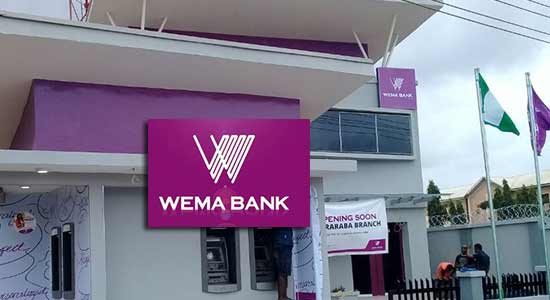
There is something quietly remarkable about an institution that survives eight decades of Nigerian economic turbulence and still finds a way to lead. Wema Bank has done exactly that. Founded on May 2, 1945, it is Nigeria’s oldest indigenous bank. But its most significant achievement is not its age. It is the fact that in 2026, it is winning awards for being the most forward-thinking digital bank in the country.
Euromoney, one of the world’s most respected authorities on financial services, named Wema Bank Nigeria’s Best Digital Bank for Consumers for 2026. It was the second consecutive year the bank received the recognition, following its Best Digital Bank award for 2025. The criteria are demanding: innovation, measurable customer impact, and the ability to deliver simpler, smarter, and more accessible banking experiences. Wema Bank met them, and then some.
At the heart of this recognition is ALAT, Africa’s first fully digital bank, pioneered by Wema Bank as a product years before the term “digital banking” became standard vocabulary in the Nigerian financial industry. ALAT has continued to evolve well beyond its original form. The platform now offers voice banking, tap-to-pay services, AI-powered fraud monitoring, faster digital account onboarding, personalised financial recommendations across savings, investment and credit products, and integrated investment opportunities through strategic partnerships. These are not incremental upgrades. They reflect a bank that listens to how its customers actually live and builds accordingly.
Much of this direction traces back to the Managing Director and Chief Executive Officer, Mr. Moruf Oseni, who has led Wema Bank since April 2023. Oseni is not a stranger to what digital banking demands. Before becoming MD/CEO, he served as the Executive Director directly responsible for the bank’s consumer and SME banking, payments, e-business, and ALAT itself. He understood the product before he led the institution. That intimacy with the bank’s core digital asset has shaped how he runs the organisation.
Oseni holds a Master of Finance from London Business School, an MBA from INSEAD in France, and has completed the Advanced Management Programme at Harvard Business School. Before banking, he began his career in technology at the Nigeria Liquified Natural Gas Company, before moving to Salomon Brothers/Citigroup Global Markets in London and New York, and later to Renaissance Capital as Vice President. He came to Wema Bank in 2012 as an Executive Director and spent over a decade learning every layer of the institution before taking the top job.
Under Oseni’s leadership, Wema Bank has also set its sights on a target that speaks directly to financial inclusion. The bank is pursuing N100 billion in uncollateralised loans to women-led micro, small, and medium enterprises, a commitment that acknowledges how much untapped economic potential sits within Nigeria’s women-owned businesses. The bank has equally committed to raising N130 billion for its recapitalisation programme, strengthening the balance sheet that supports all of its lending and digital ambitions.
Additionally, Wema Bank has built a culture of innovation that extends beyond its products. The annual Hackaholics Digital Summit has become a platform for young Nigerian technologists and entrepreneurs to pitch ideas and compete for support, with the bank positioning itself as a genuine partner in Nigeria’s broader technology ecosystem. Through the Sara initiative and the She Empowers Her Award, the bank has also invested in recognising and uplifting women whose work is creating opportunities for others.
Verifiably, Wema Bank’s journey from a single-branch institution in 1945 to the pioneer of Africa’s first fully digital bank is one of the more compelling stories in Nigerian financial services. What makes it more compelling is that the bank is not coasting on that history. Mr. Oseni has been direct about what drives the institution: innovation, he has said, has never been about technology for its own sake. It has always been about creating solutions that make banking easier, faster, safer, and more rewarding for every customer.
Eighty years in, that is still the mission. And it is working.
Samuel Agboola is a member of the editorial team of TheScript Newspapers