

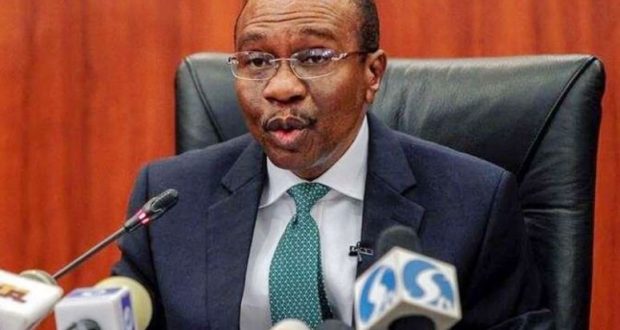
The Central Bank of Nigeria, CBN, said on Wednesday in Abuja that the country’s foreign reserves has risen to about $42.8 billion.
The spokesman of the bank, Isaac Okoroafor, said the country’s economy has continued to make significant progress, with inflation figures coming down while the foreign reserves are going up.
The balance in the reserves stood at $40.56 billion in January and $34.53 billion in December 2017.
On Wednesday, the National Bureau of Statistics, NBS said Consumer Price Index, CPI, dropped for the 13th consecutive month since January 2017, to about 15.13 per cent in January 2018.
The rate was about 15.37 per cent in December 2017.
CPI measures the composite changes in the price level of market basket of consumer goods and services purchased by households, such as transportation, food and medical care, over a period.
On the reserves, Mr. Okoroafor told participants in the Rice Farmers Association of Nigeria, RIFAN, meeting in Abuja that the rising balance was indicative of the positive impact of government policies on the economy.
Specifically, Mr. Okoroafor attributed the steady growth of the reserves to CBN’s policies directed at reduction in importation of goods, especially food that can be produced in the country.
In 2015, the CBN introduced the policy barring importers of 41 items and services from accessing foreign exchange from the official inter-bank market.
The policy covered importation of certain goods and services that could be produced within Nigeria.
Priority was given in the allocation of foreign exchange to the importation of critical raw materials, plants and machinery for the real sector to sustain the stability of the foreign exchange market and efficient utilisation of foreign exchange.
Mr. Okoroafor told the farmers at the meeting that rice production under the Anchor Borrowers Programme initiated by the CBN has remained a reference point in the bank’s efforts at conserving the nation’s foreign exchange.
“CBN decided to go into the funding of rice and other agricultural produce because we felt that food supply is key if price stability is to be maintained,” he said.
“Food makes up a disproportionately large portion of the basket of prices in the country. We (CBN) decided to target food supply to bring down inflation.
“Second, we went into this business of funding agriculture because we felt that food, especially rice, was a key component of importation in Nigeria.”
He said over the years, rice was a key component in the depletion of the country’s foreign reserves as billions in foreign exchange were spent every year on the importation of the commodity.
Mr. Okoroafor said the CBN believed if the country could deal with rice importation and replace it with local rice production, it would be working at rebuilding the foreign reserves.
He said the country has largely succeeded in meeting those objectives as the coutry’s foreign reserves have gone up to $42.8 billion as at Tuesday, while the inflation figures have been dropping.
He said the general expectation was that it would continue to drop throughout the year.
Wedneday’s meeting with RIFAN was the beginning of a new form of collaboration between CBN and commodity associations to reach producers of various commodities in the country.
President of the RIFAN, Aminu Goronyo, said the association keyed Nigeria into the global agric-business practice.
Mr. Goronyo said RIFAN has the capacity to handle the new collaboration with the CBN as over six million rice farmers in the country have been placed on a digitised platform with biometric cards through which each member could receive adequate inputs and funding.
Mr. Goronyo said that RIFAN has members in all states of the federation and Abuja, adding, that its members in 32 states were participating in the pilot project.
Under the platform, he said, members would enjoy tractor services and inputs suppliers, such as improved seedlings, fertilisers, agro-chemicals, extension services and off-takers.