
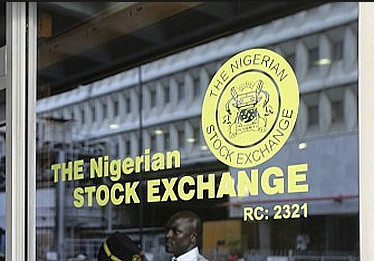
Apparently worried by the long wait for the return of Initial Public Offering (IPO) on the stock exchange, investors have stressed the need for government to develop focused strategies that will economically empower indigenous firms and multinationals, as well as stimulate their investments’ interest.
The investors, who described IPOs’ relaunch as the only option for capital market stability, however maintained that the offerings cannot thrive in an environment where the secondary market is not vibrant.
According to them, IPOs’ resurgence would deepen the market and make it capable of providing the needed funds required to fortify the equity standings of several listed companies that are now in the clutches of debt overhang.
Furthermore, it would boost the Nigerian stock market’s average, in terms of volume of activities and contributions to GDP, which is currently rated low when compared to other emerging markets’.
In 2015, only Seplat Petroleum Development Company Plc and Transcorp Hotels Plc had IPOs and while Seplat’s, a global IPO, was 100 per cent successful, Transcorp Hotels recorded only 50 per cent subscription.
In 2007 and 2008, IPOs were common before the market witnessed a downturn and companies shunned the capital raising strategy, embracing mostly rights issues and bonds.
Analysts said that the overall weak macroeconomic scenario, sustained negative market sentiments in the past few years, coupled with tensed socio-political space, have not encouraged successful primary market activities.
It is also on record that some planned IPOs have remained on hold due to the prevailing negative market sentiments, driven by growing uncertainties on the back of falling oil price and other macro-economic challenges.
Investors, in an interview with The Guardian, maintained that the market is in dire need of liquidity.
An investment analyst, Johnson Chukwu, argued that several reasons entice companies to list on the Exchange, including the expectations that the market will appropriately buy them and place a premium to the intrinsic worth as a lure for investors to trade on the equities.
“Again, there should be liquidity in the equities market so that people can actually buy and trade their shares. Lastly, that the listing will give them better access to credit.
“Unfortunately, in a bearish and dampened equities market, these factors are not present. Until there is a significant recovery in the secondary market, one should not expect a re-launch in IPO.
“The economy is weak and the market pricing reflects earnings’ capacity of companies, which now has been weakened by inflationary period the economy had witnessed.”
He attributed the weak economy to hostile and inconsistent macro-economic policy and regulatory environments and lack of transparency in economic management.
The Publicity Secretary of the Independence Shareholders Association of Nigeria, Moses Igbrude, said to revive the IPO segment of the capital market, the regulators must make concerted efforts to ensure that the market is attractive to “would- be companies.”
“The benefits of being a public quoted company must be clear and concise, but presently, such incentives are not there and that is why many companies have delisted and more are planning to delist.
“Again Federal Government must compel or ask companies like SAHCOL and the likes, where government still have shares, to be listed on the market. They should also ask or encourage the telecommunications companies and other multinationals to list on the market by giving them some incentives.
“The regulators should be more flexible in their listing requirements, while policy makers should know the importance of the capital market and how the market can be repositioned to grow the economy.”
An independent investor, Amaechi Egbo, explained that government should make listing in the nation’s bourse less stringent and consider abolishing withholding tax on dividends.
According to him, there was need for government to also provide more incentives to companies that are listed on the stock exchange.
He argued that this may mean some loss of revenue to the government at the initial stage, but however, maintained that the actual benefits to the company will more than compensate for any previous losses.
According to him, for issuers to approach the market to raise capital, there must be some reasonable level of recovery.
He pointed out that there was need for government to initiate strategic policies that would grow businesses in Nigeria, adding that stockbrokers must also ensure that issuers raise money in a manner that is competitive and less expensive.
“We need an economy where issuers can see growth. The growth must impact on their businesses and it is when the business expands that companies can approach the market to raise capital. Issuers must also see a market that is growing. They must see that the market is right for an issuer to come.”
The Chief Executive Officer of NSE, Oscar Onyema, while briefing the stockbroking community, analysts, media and other stakeholders, on the performance of the market in the preceding year and prognosis for the market in 2018, noted that the equity market activity skyrocketed from 2016 levels, as market turnover increased by 121 per cent to N1.27 trillion from N0.58 trillion.
“IPO activity in the year remained mute. However, there were several other positive indicators, including the revival of supplementary listings and the return of new issuances.
“The value of supplementary listings increased by 27 per cent, bringing the total value of equity issues in 2017 to N408 billion,” he said, adding that NSE recovered from the macroeconomic overhang of the commodity down-cycle to become the third best-performing market in 2017 globally, with a 42 per cent return in the NSE ASI index.