
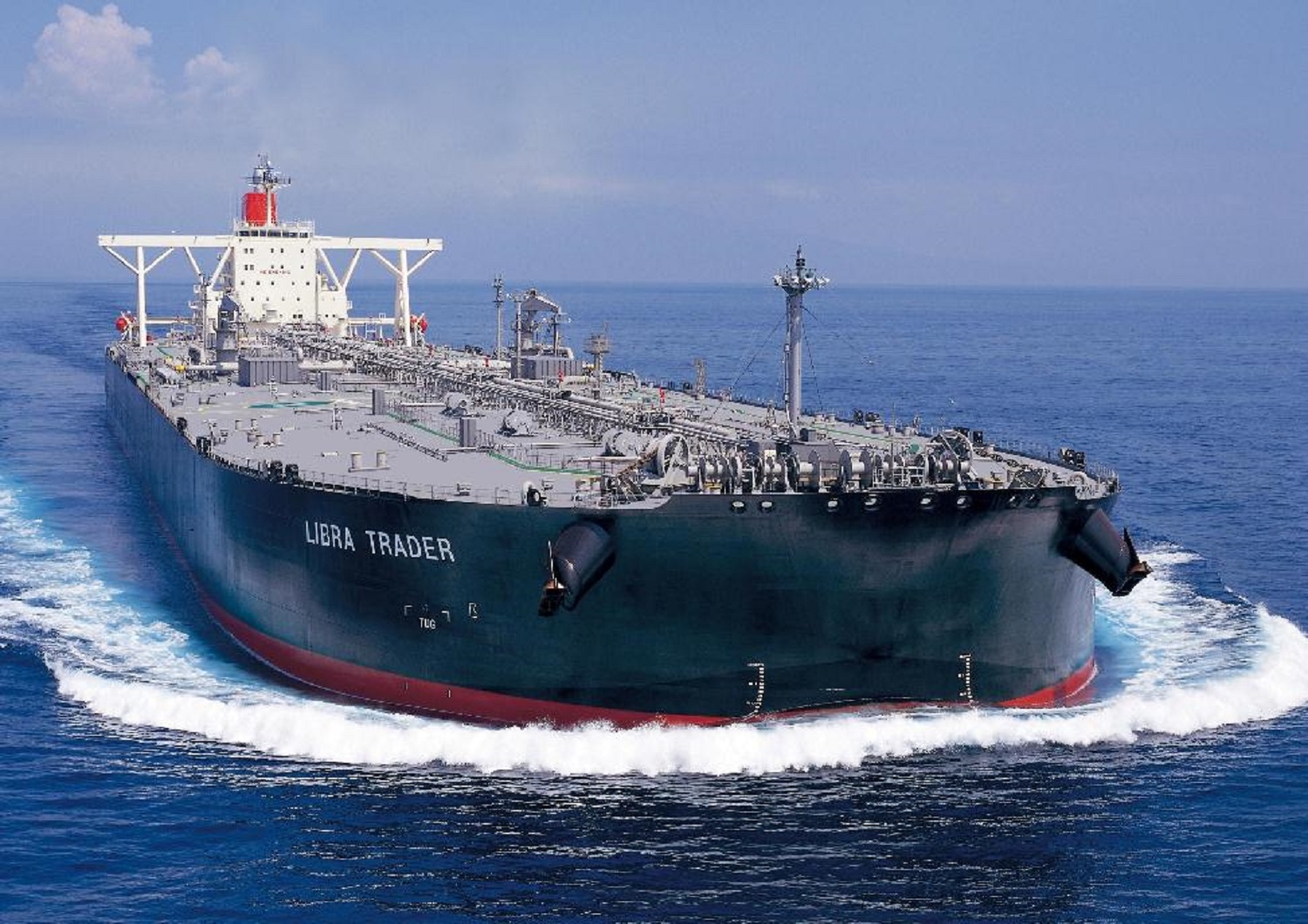
Nigeria’s crude exports rose in July, for the first time in four months as Shell lifts export restrictions on key Bonny Light grade, vessel tracking data obtained from the Bloomberg Terminal show.
Total July exports, excluding Akpo, rose to 1.64m barrels per day (b/d) versus revised 1.61m b/d in June. Akpo condensate shipments, rose to 123, 000 b/d versus 95, 000 b/d in June. Combined crude and condensate exports rose to 1.762m b/d from revised 1.688m b/d.
“This is a natural consequence of three factors, I will say. There is relative peace in the Niger-Delta, that is, militancy has abated. A corollary of this is that there has been no major pipeline damage or declaration of force majeure. The third factor is pure market dynamics. Oil prices hover around $70 per barrel and this is driving supply” Ayodele Oni, Energy Partner at Lagos-based Bloomfield Law Practice said on a phone interview.
The biggest crude export rises were for Brass, Bonny and Forcados, Bonny Light increased to 127, 000 b/d in July from 87, 000 b/d in June Forcados flows were 204, 000 b/d versus 162, 000. Brass exports rose to 98, 000 b/d versus 32, 000 in June.
Other major flows (in b/d) in July versus June, Agbami: 189, 000 versus 230, 000, Bonga: 123, 000 versus 158, 000, Erha: 123, 000 versus 95, 000, Escravos: 139, 000 versus 190, 000, Usan: 97, 000 versus 67, 000 and Qua Iboe: 215, 000 versus 253, 000.
Amid the rising crude exports, Nigeria’s oil and gas industry is fraught with uncertainties because of the political, legal and regulatory environment in which it operates.
Nigeria has passed a governance aspect of the Petroleum Industry Bill (PIB) which was broken into four components, but the fiscal aspect which is the most important for guiding decisions on financial investments remain stuck in the national assembly over disagreements with terms.
This in turn has led to low investment appetite among investors and low oil reserves replacement ration in Nigeria, people with knowledge of the industry say.
“For these oil companies, the thinking behind this is survival, there’s a lot of uncertainty in the market, you can’t come into a market that is so uncertain then start to do a new development, you can’t survive it because you don’t know what the regulatory regime will be,” Chuks Nwani an, energy lawyer told BusinessDay, in July.
The absence of investments into new fields have seen Nigeria’s oil reserves stagnate at 36.18 billion barrels, as at the first quarter of 2018, according to Ibe Kachikwu, minister of state for Petroleum Resources, at the recent Nigeria Oil and Gas (NOG) conference in Abuja.
Africa’s biggest oil producer has targeted 40 billion barrels in reserves since 2010 but has not achieved the target due to dwindling rate of discoveries and further slump in investments in discovered fields.
According to statistics from OPEC, Nigeria oil reserves decreased to 36.247 billion in 2011 from 37.200 billion recorded in 2010, while in 2012 there was relative improvement to 37.139 billion but went down again to 37.071 billion in 2013. In 2014, it stood at 37.448 billion before sliding down to 37.062 in 2015 while in 2016 it stood at 37.453 billion.
According to the BP annual statistical bulletin released June 2017, OPEC member Iran has increased its oil reserves from 138 billion barrels in 2006 to 158 billion barrels in 2016. Iraq has moved from 115 billion barrels in 2006 to 153 billion barrels in 2016. Saudi Arabia has moved from 264.3 billion barrels in 2006 to 266.5 billion barrels in 2016.
In this time period (2006 – 2016) total African reserves increased to 128 billion barrels from 116.9 billion barrels largely led by Angola and Libya.