
War risk insurance (WRI) is an additional surcharge imposed by international shipping companies on cargo bound for Nigeria. It comprises two key components: war risk liability, which covers people and goods aboard the vessel and is calculated based on the indemnity amount, and war risk hull, which covers the vessel itself and is determined by its value. This financial burden was initially introduced during the height of Niger Delta militancy and piracy. Although the Nigerian Bureau of Statistics does not have precise data on the total WRI payments made to international insurers, available figures indicate that Nigeria has paid over $1.5 billion in the past three years alone to Lloyd’s of London, Protection and Indemnity (P&I) insurance, and other foreign insurance firms. The impact on Nigeria’s economy is staggering: for a Very Large Crude Carrier (VLCC) valued at $130 million, the WRI surcharge per voyage is approximately $445,000. For new container vessels valued at $150 million, the cost rises to $525,000 per voyage. Maersk, one of the world’s largest shipping companies, has also introduced a transit disruption surcharge of up to $450 per container, while other shipping lines impose a war risk surcharge of $40–$50 per 20-foot container.
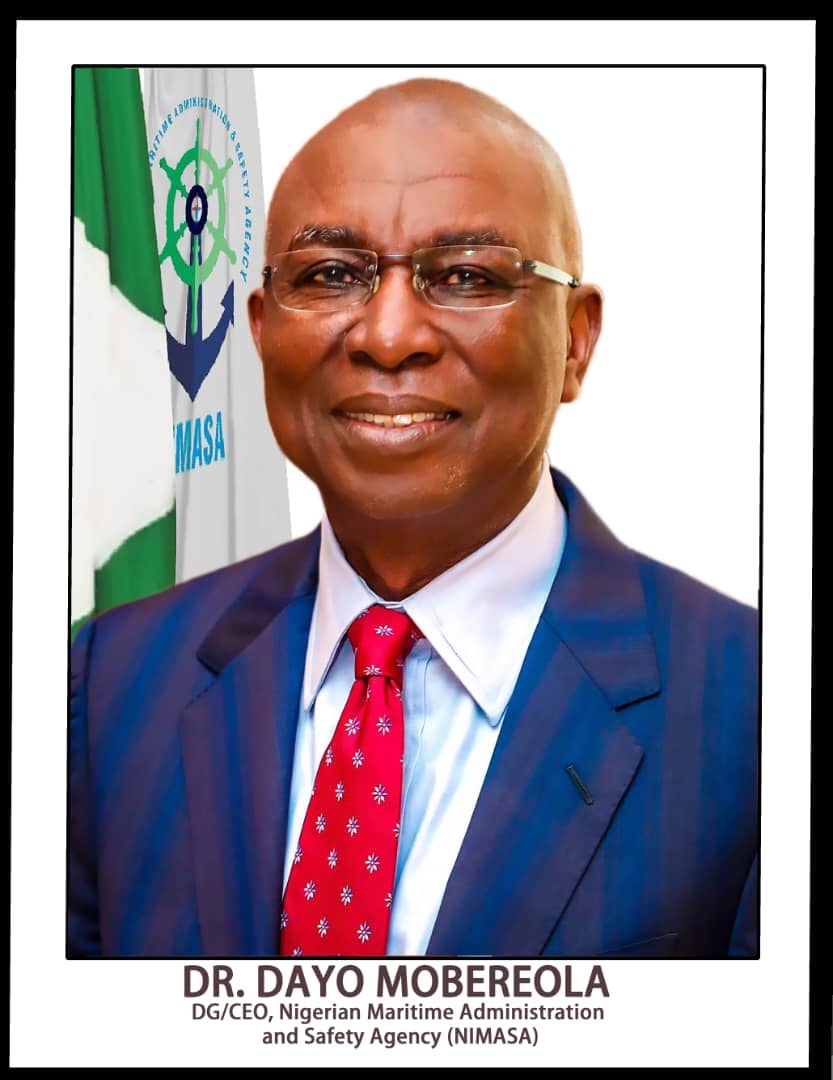
Recognizing the severe economic implications of this financial burden, the Nigerian Maritime Administration and Safety Agency (NIMASA) under the leadership of Dr. Dayo Mobereola has launched an aggressive campaign to eliminate war risk insurance on Nigeria-bound cargo. The NIMASA Act and the Merchant Shipping Act mandate the agency to promote shipping development, and removing the WRI premium has become a central focus of its maritime reforms. The security concerns that originally justified these premiums no longer exist. Nigeria has not recorded a single piracy incident in over three years, and in 2021, the International Maritime Bureau (IMB) officially removed Nigeria from its list of piracy-prone countries. Over the past five years, NIMASA, in collaboration with the Nigerian Navy, has led an unprecedented crackdown on piracy in the Gulf of Guinea, earning global recognition from the International Maritime Organization (IMO). Despite these achievements, international shipping companies have continued to impose war risk insurance premiums on Nigeria-bound cargoes. In 2023, the International Bargaining Forum (IBF) further validated Nigeria’s progress by delisting the country from the list of high-risk maritime nations. With piracy no longer a concern, why has the international shipping community continued to impose these excessive premiums?
NIGERIA’S EFFORTS TO MITIGATE WRI PREMIUMS To address this issue, Nigeria through the Ministry of Marine and Blue Economy and the Ministry of Defense made significant investments in maritime security through initiatives like the Deep Blue Project, which has successfully eliminated piracy in the country’s waters for over 30 consecutive months—a record unmatched anywhere in the world. In addition, Nigeria collaborates closely with the IMO and other international bodies to combat maritime threats, further reducing its risk classification. IMO Secretary-General Arsenio Dominguez has publicly commended Nigeria’s efforts in securing the Gulf of Guinea. Despite these improvements, shipowners and insurers have refused to acknowledge Nigeria’s new security status, continuing to levy exorbitant premiums on vessels operating in the country.
MOBEREOLA’S INTERNATIONAL DIPLOMACY: BRINGING GLOBAL ATTENTION TO THE ISSUE Determined to break this cycle of financial exploitation, Dr. Mobereola under the directives of the Minister of Marine and Blue Economy, Adegboyega Oyetola took Nigeria’s case to international stakeholders, urging them to support the removal of war risk insurance premiums. In a major diplomatic move, he engaged Chatham House, where he met with Dr. Alex Vines, Director of the Africa Programme, who agreed to escalate the matter to the United Nations. NIMASA has also engaged major global shipping organizations, including: • BIMCO (Baltic and International Maritime Council), the world’s largest shipping association. • The International Chamber of Shipping (ICS). • INTERCARGO (International Association of Dry Cargo Shipowners). • INTERTANKO (International Association of Independent Tanker Owners). In discussions with these organizations, Dr. Mobereola emphasized that Nigeria has invested billions in maritime security, yet continues to be unfairly penalized. He urged the global shipping community to recognize the country’s improved security status and remove the unjustified WRI premiums.
Stinne Taiger Ivø, Deputy Secretary General of BIMCO, acknowledged Nigeria’s progress and stated that shipowners should take the lead in pushing for lower premiums. Similarly, Zhou Xianyong of INTERCARGO assured NIMASA of their support in Nigeria’s campaign to be delisted from war risk insurance premium zones. Reducing these premiums is critical for Nigeria’s competitiveness in global trade. Lower shipping costs will Encourage more international trade, Attract foreign investment, and Strengthen Nigeria’s position as a leading blue economy player.
Recently, NIMASA met with a Danish delegation led by Kristin Skov-Spilling, Chief Technical Advisor from the Danish Ministry of Foreign Affairs, urging Denmark to advocate for a reduction in war risk insurance premiums. Some critics argue that Denmark cannot intervene in private insurance matters, but this argument is flawed. Denmark has a significant interest in Maersk Line, which contributes over 15% of the country’s GDP. If Denmark exerts pressure on Maersk, other shipping companies will likely follow suit. Dr. Dayo Mobereola and his Management team at NIMASA have successfully brought global attention to Nigeria’s unfair war risk insurance burden. Now, it is time for all stakeholders—government, industry, and international bodies—to support the removal of this unjustified premium. Nigeria has fulfilled its obligations, securing its waters and eliminating piracy. Yet, foreign insurance firms continue to profit while Nigerian businesses and consumers bear the costs. The message is clear: Nigeria cannot continue paying war risk insurance premiums indefinitely. The time for change is now and lets sustain the momentum.
OSAGIE EDWARD, FNIPR is the Head of Public Relations at the Nigerian Maritime Administration and Safety Agency, NIMASA.