

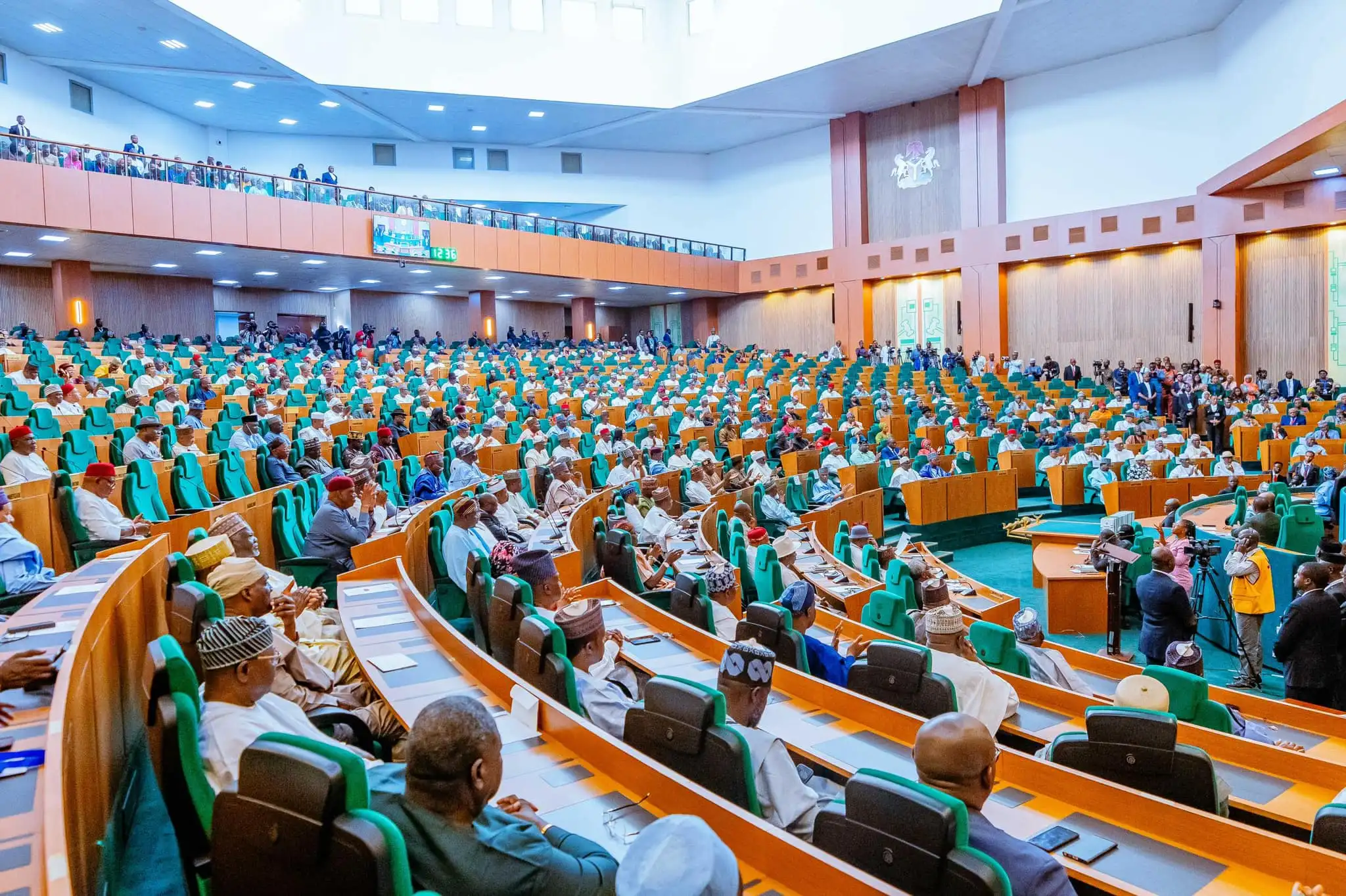
NIMASA projected ₦724 billion in revenue for 2026 while outlining reforms including automation and a revamped CVFF.
The House of Representatives Committee on Maritime Safety, Education and Administration has strengthened its oversight of the Nigerian Maritime Administration and Safety Agency (NIMASA), insisting on stricter performance benchmarks and transparency in the agency’s 2026 budget proposals.
At a budget defence session on Tuesday, the committee cautioned that vague projections and weak outcomes would no longer be accepted, extending the warning to both NIMASA and the Maritime Academy of Nigeria.
Chairperson of the committee, Khadija Abba-Ibrahim (APC, Yobe), said chief executives of maritime agencies must take full responsibility for their projections, implementation plans and results.
She described the exercise as more than routine legislative oversight, noting that it serves as a critical test of accountability, especially for members engaging the sector for the first time.
NIMASA, in its presentation, projected a gross revenue of about ₦724 billion for 2026, with expenditure plans spanning recurrent obligations, capital projects, maritime security operations, seafarers’ training and infrastructure upgrades.
While acknowledging the agency’s strategic role in protecting Nigeria’s waters and facilitating maritime trade, Ms Abba-Ibrahim stressed that commendation must be matched with measurable performance.
“This session is an opportunity for the agency to clearly articulate its 2026 roadmap and address pressing concerns, ranging from maritime insecurity to capacity development and operational efficiency,” she said.
She said the session offered NIMASA an opportunity to clearly outline its 2026 roadmap and address key challenges, including maritime insecurity, human capacity gaps, and operational inefficiencies.
The committee demanded detailed, data-driven submissions covering maritime safety initiatives, workforce development, revenue optimisation strategies, and the status of ongoing and proposed capital projects.
Describing the maritime sector as central to Nigeria’s economic architecture, lawmakers emphasised that budgetary allocations must translate into tangible outcomes, particularly in strengthening security, promoting indigenous shipping and supporting sustainable growth.
They also reaffirmed their willingness to back reforms that could reposition the sector, but maintained that future approvals would depend on demonstrated performance, transparency and impact.
In response, NIMASA Director-General Dayo Mobereola said the agency had begun full automation of its operations and revenue collection systems in 2025, following approval by the Federal Executive Council.
He identified the MOKOSA platform as a key component of the reform, explaining that it is designed to block leakages and ensure transparent remittance of government revenues.
Mr Mobereola said the agency’s reforms go beyond digitisation, focusing on revenue protection and institutional accountability.
On the Cabotage Vessel Financing Fund (CVFF), he disclosed that the scheme was relaunched in January and has already attracted about 60 applications from indigenous shipping firms. He added that a stricter, bank-led framework has been introduced to address past challenges associated with mismanagement.
Under the new model, financial institutions are expected to assess risks and guarantee repayment before disbursement, a move he said would enhance discipline and sustainability.
“This session is an opportunity for the agency to clearly articulate its 2026 roadmap and address pressing concerns—ranging from maritime insecurity to capacity development and operational efficiency,” she said.
The DG also noted ongoing efforts to support local shipowners with access to vessels and essential materials, adding that these initiatives would gain traction under the restructured system.
He further highlighted Nigeria’s return to the International Maritime Organisation’s Council after 14 years, describing it as a significant step toward strengthening the country’s influence in global maritime governance.
Credit: PremiumTimes