

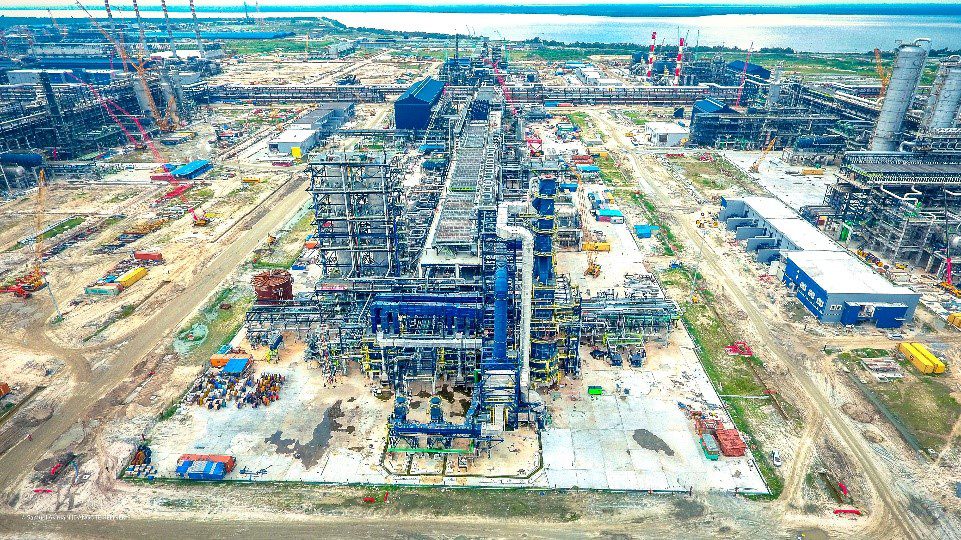
In July 2026, Dangote Refinery did something it had never done before. It stopped selling petrol in the local currency, naira and started pricing it in dollars at 0.779 dollars to be precise. Eight days later, it went back to selling in naira but at a new price of N1215, 13 percent higher than before. For a country whose entire domestic refining strategy was built on the promise that local refining would insulate Nigerians from currency shocks, that eight-day episode said more than any government press statement ever could.
It raised a question that has been sitting under the surface of Nigeria’s energy conversation for two years now: Is the country’s domestic crude supply policy actually working?
The honest answer is, it depends on which policy you’re asking about and which quarter you’re looking at.
Nigeria runs two separate arrangements that people tend to lump together.
The first is the Domestic Crude Supply Obligation, or DSCO created under section 109 of the Petroleum Industry Act, 2021. It requires crude oil producers to make specified volumes available to licensed oil refineries every month, based on consultations the Nigerian Upstream Petroleum Regulatory Commission holds with producers and refiners. It is not a subsidy or a directive.Transactions still happen on a willing buyer, willing seller basis, meaning a producer can technically comply by offering crude, even if the price offered makes the deal commercially unworkable for the refiner.
The second is the naira-for-crude arrangement, introduced in October 2024 specifically between NNPC and Dangote. This was meant to let Dangote buy crude in naira instead of dollars, easing pressure on the refinery’s forex exposure, and in theory, keeping pump prices more stable and shielded from exchange rate swings.
Both policies share the same goal, getting more Nigerian crude refined at home instead of exported raw and reimported as fuel, but they have had very different track records.
The regulator’s own data show real movement. In the first quarter of 2026, NUPRC allocated 61.9 million barrels to refiners, while producers offered 68.7million, but actual deliveries lagged badly behind, with the shortfall blamed on pricing disagreements between producers and refiners. By the second quarter, the picture flipped. NUPRC reported 53.7 million barrels of crude and condensate actually supplied to local refiners, a 97.4 percent compliance rate. Dangote alone required 63 million barrels for the quarter, was offered 68.1 million, and accepted 52.6 million, about 78 percent of what was actually offered to it.
NUPRC credited the turnaround to rising domestic promotion, and more importantly to long-term supply agreements backed by bankable sales and purchase contracts between producers and refiners. That detail matters more than the headline percentage. It suggests the improvement is not just regulatory pressure working, it is commercial terms finally being negotiated properly, which tends to hold up better over time than a compliance figure that regulators simply announce.
This is where the gap between paper policy and lived reality shows up most sharply. From the very start of the arrangement, NNPC struggled anywhere near the volumes it had promised. Industry sources say that the original target of 350,000 barrels per day was never met, with actual supply hovering close to 120,000 barrels per day at best, before dropping to zero by February 2025.
Between October 2025 and mid-March 2026, Dangote reportedly received just 29.21 million barrels against a requirement of 108.14 million barrels, a performance of roughly 24 percent. To keep its plant running, the refinery had to import foreign crude worth an estimated 3.74 billion in 2025 alone, from countries including the United States, Brazil, Algeria, defeating the entire currency-saving purpose of the arrangement.
More recently, the two sides have publicly disagreed on whose side the shortfall is. Dangote says it received only three out of the fourteen expected cargoes under the naira arrangement in 2026. NNPC insists it allocated 100 percent of all naira-dominated crude cargoes that were actually available, arguing that nomination timelines and operational scheduling, not withholding, explain the gap.Both statements can be technically true at once, which is exactly the problem. When two parties measure compliance against different baselines, ordinary Nigerians are the ones left guessing why fuel prices keep moving.
The consumer-facing consequences of this uneven implementation have been hard to miss. Petrol at the pump swung from a low of N699 per litre in December 2025 to as high as N1, 364 at NNPC outlets in Abuja by April 2026, before easing off again. A report by the Major Energy Marketers Association of Nigeria tracked average petrol prices climbing steadily through the first half of 2026, peaking around N1, 596 in May, with consumption falling as households cut back under the pressure of higher transports and cooking costs. One widely cited data points out the cost of preparing a pot of jollof rice for a family of five up nearly 20 percent in just six months, driven largely by fuel and logistics costs.
Some of this volatility came from forces outside Nigeria’s control, particularly the surge in Nigeria’s global crude prices tied to the escalation of conflict in the middle east in early 2026 which pushed Brent above 100 dollars a barrel at one point. But a policy designed specifically to buffer Nigerians against that kind of external shock should, in principle, have softened the blow more than it did. Instead, Dangote’s brief switch to dollar pricing in July shows how thin that buffer still is when domestic crude supply falls short.
It is worth noting that Nigeria has run this exact experiment before, with gas. The Domestic Gas Delivery Obligation, also enforced under the PIA, is meant to guarantee that gas producers prioritise the local market, particularly power generation, before exporting. Yet as of early 2026, Nigeria was still exporting nearly 46 percent of its utilized gas even as thermal power plants starved for supply and electricity shortages worsened, with producers drawn to the more lucrative export market and frustrated by the government’s regulated domestic gas price. The parallel is not exact, but the underlying dynamic is familiar: an obligation exists on paper, enforcement improves, and the commercial incentives pulling producers towards or higher prices never fully go away.
If the question is whether the regulatory framework exists and is being tracked seriously, the answer is yes. NUPRC now publishes quarterly DCSO , holds monthly consultations between producers and refiners, and has visibly pushed compliance from a weak first quarter to a strong second quarter in 2026. That is not nothing, especially in a sector with a long history of policies that only exist in text.
If the question is whether Nigerians are yet feeling the stability the policy promised, cheaper, steadier prices, less exposure to the naira’s swings against the dollar, the answer is not yet, and not consistently. The naira-for-crude arrangement with Dangote has failed to deliver its committed volumes for most of it’s life, forcing the refinery into costly dollar-denominated imports, and at least once into dollar-denominated pricing that undercut the entire point of the deal. Compliance on the upstream side is improving, but compliance on the commercial and pricing side, where it actually reaches the pump, is still catching up.
Nigeria’s domestic crude policy is not a failure. It is a work in progress that has started producing better numbers, but numbers on a NUPRC report and a stable price at the filling station are still two different things. Until the long-term supply NUPRC credits for the Q2 improvement hold firm across a full year, through price shocks and not just calm quarters, it is too early to call this policy a success. It is fairer to call it a policy that is finally being tested properly, with the outcome still undecided.
Kingsley Mordi (Ph.D.) is an accomplished oil and gas professional and upstream infrastructure expert with over 25 years of experience in Regulatory Compliance, Government Relations, and energy-sector Management. He holds a PhD in Strategic Marketing, an MSC, MBA, and a BSC in Economics. He is a member of several professional bodies, including NAEE, NES, NIPR, NIM, IORM and APCON. He can be reached at kingsleymordi.ng@gmail.com